


About Prakasam District: The Land of Andhra Kesari
Prakasam is one of the most vibrant and culturally rich districts of Andhra Pradesh, known for its scenic beauty, historical landmarks, and diverse traditions. Bordered by the Bay of Bengal on one side and surrounded by lush greenery and hills on the other, Prakasam is a perfect blend of nature and heritage.
The district takes pride in its deep-rooted history, reflecting the legacy of great leaders, ancient temples, and traditional art forms that have been preserved for generations. From the calm shores of Kothapatnam Beach to the spiritual aura of Chandavaram Buddhist site, every destination here tells a story of pride and peace.
Prakasam is also a hub for agriculture, education, and growing industries, offering a balance between rural charm and modern development. Its people are known for their hospitality, simplicity, and hardworking nature — making every visitor feel at home.
Whether you seek spiritual solace, cultural exploration, or natural beauty, Prakasam welcomes you with warmth and pride — a land where the past and present shine together.
History of Prakasam
Prakasam District, located in the coastal region of Andhra Pradesh, was formed on February 2, 1970. It was created by combining parts of Guntur, Nellore, and Kurnool districts to ensure better administrative convenience and balanced regional development. The district was named in honor of Tanguturi Prakasam Pantulu, the first Chief Minister of the erstwhile Andhra State and a prominent freedom fighter known as “Andhra Kesari” (The Lion of Andhra).
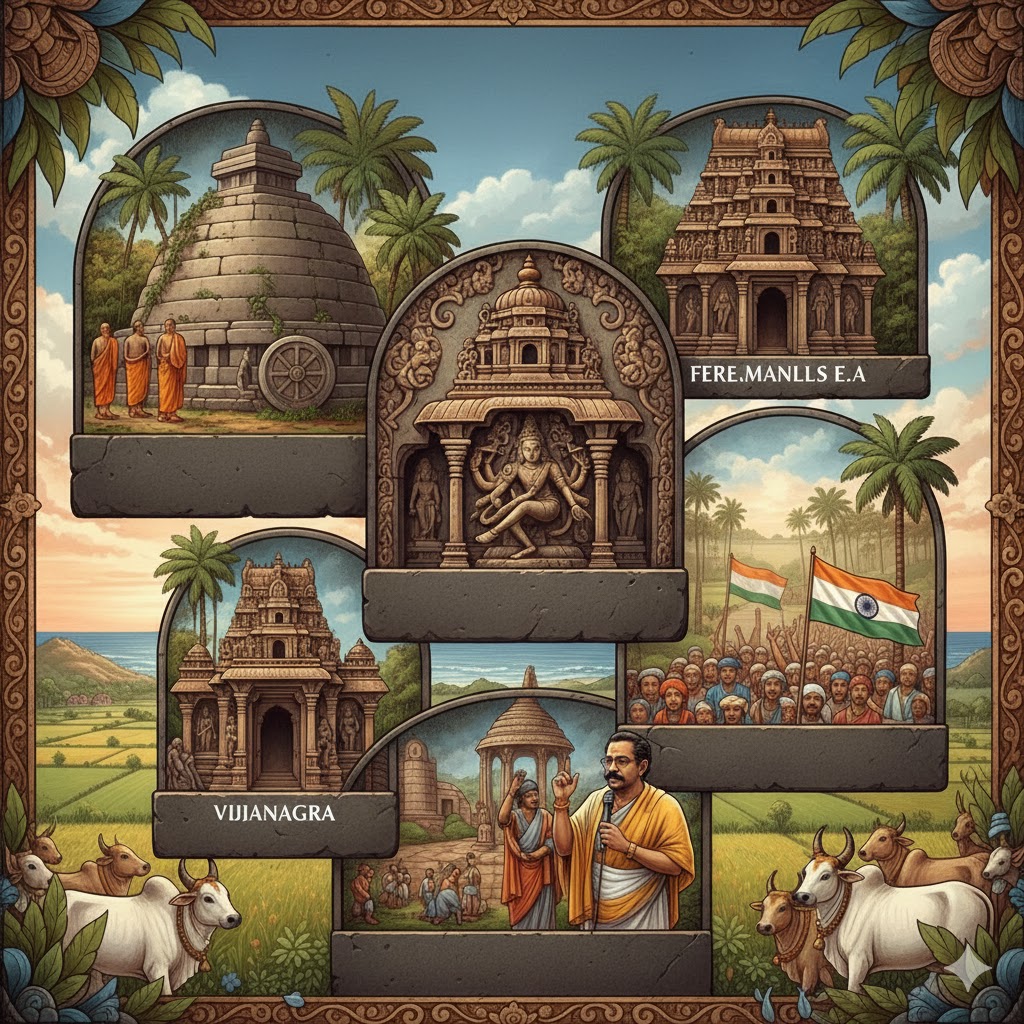
Before its formation, the region was home to several ancient kingdoms and dynasties, including the Mauryas, Satavahanas, Pallavas, Cholas, and Vijayanagara rulers. These dynasties left a lasting legacy through their architecture, temples, and cultural traditions that still enrich the district’s identity.
Prakasam has also played a significant role in India’s independence movement, with many leaders and freedom fighters emerging from this region. Over the years, it has grown into a vibrant district known for its agriculture, trade, education, and rich cultural heritage.
Today, Prakasam continues to honor its historical roots while moving forward with progress and pride — reflecting the true spirit of Andhra Pradesh.
Culture & Heritage
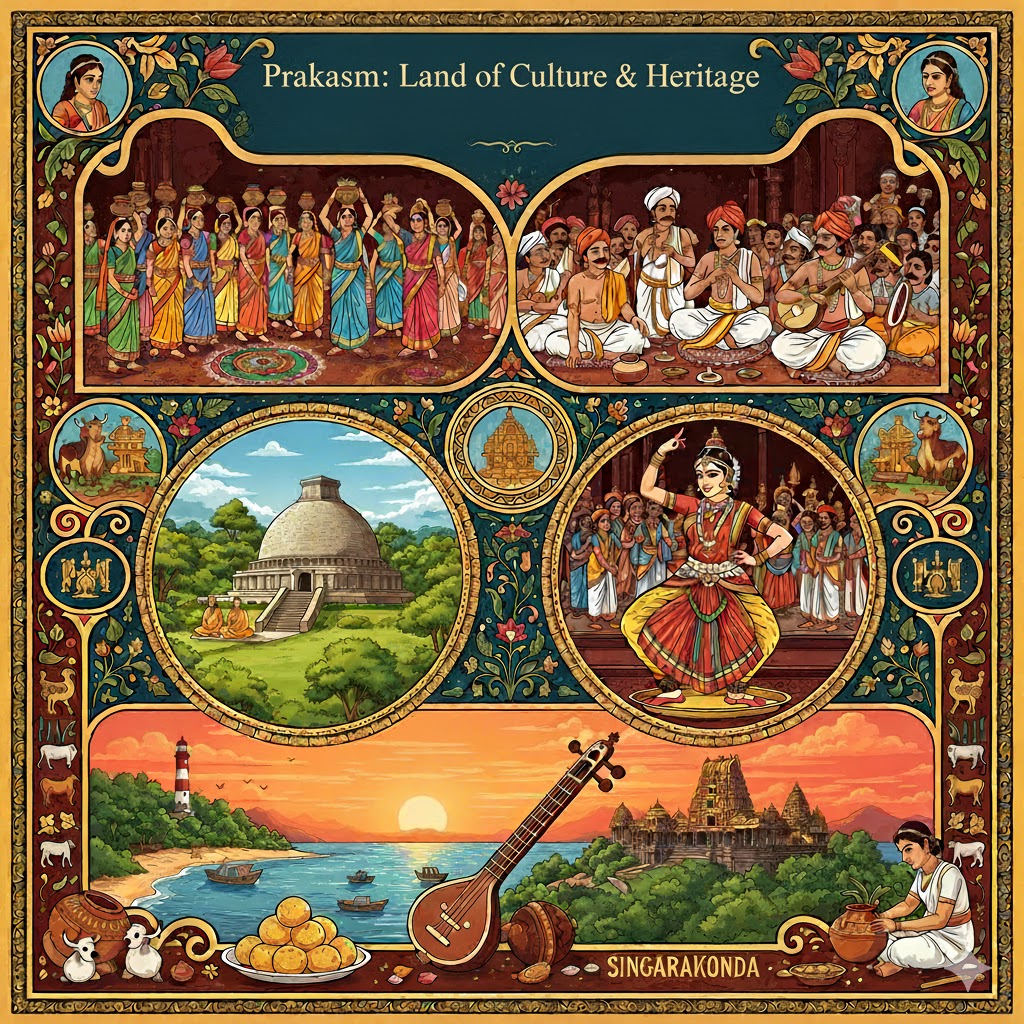
Prakasam District is a land of vibrant traditions and timeless heritage, where culture is deeply woven into the lives of its people. The region proudly showcases the rich legacy of Andhra culture through its festivals, art forms, music, and cuisine.
The people of Prakasam celebrate festivals like Sankranti, Ugadi, Vinayaka Chavithi, and Dasara with great enthusiasm and unity, reflecting their deep-rooted values and community spirit. Traditional dance forms like Kuchipudi and folk arts such as Burra Katha, Kolatam, and Harikatha remain integral to local celebrations, preserving the artistic spirit of the region.
The district’s heritage is equally impressive, with ancient temples, Buddhist sites, and architectural monuments that stand as symbols of its glorious past. Places like Chandavaram, Singarakonda, and Kothapatnam represent the historical and spiritual richness that defines Prakasam.
The warm hospitality, devotion to art, and respect for tradition make Prakasam not just a district, but a living museum of Andhra’s cultural soul — where every festival, monument, and melody echoes the pride of its people.
Geography & Economy
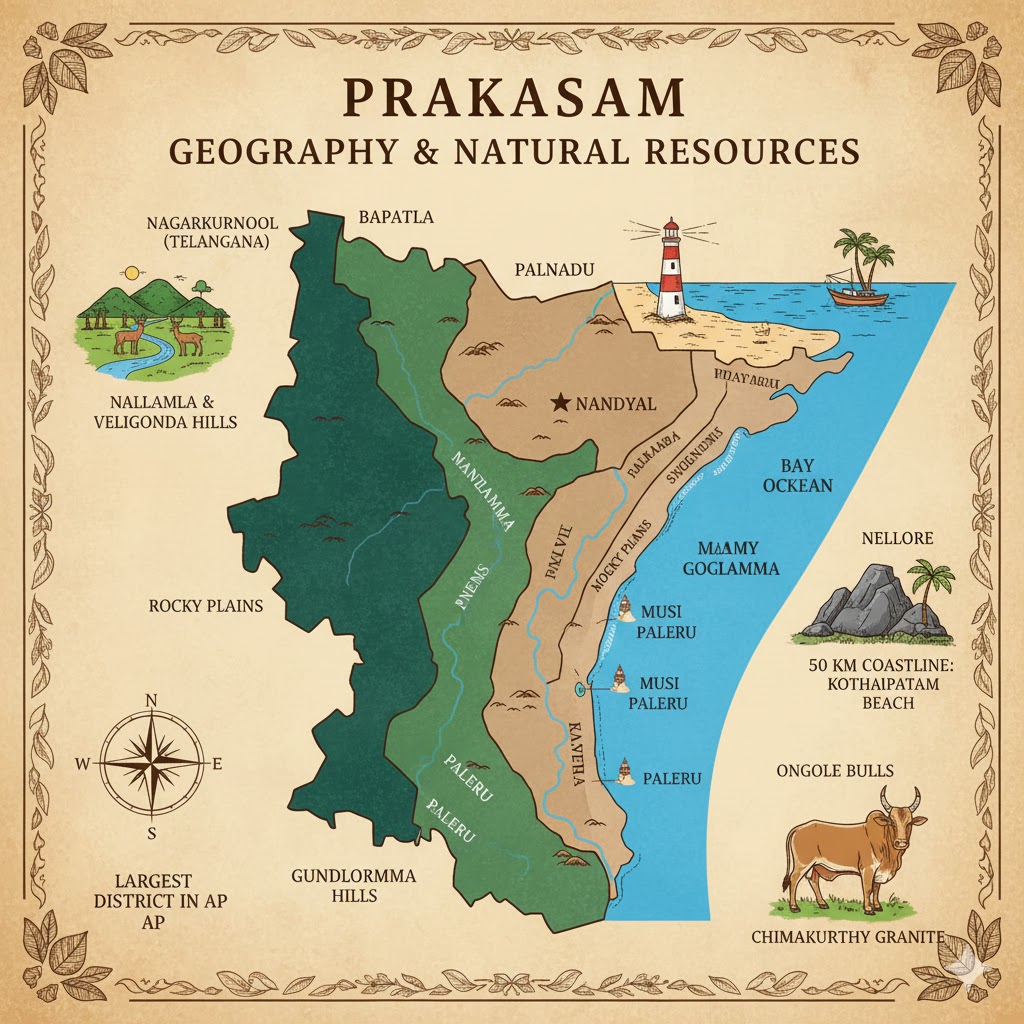
Prakasam District is located along the southeastern coast of Andhra Pradesh, bordered by Guntur District in the north, Nellore District in the south, Kurnool and Nandyal in the west, and the Bay of Bengal to the east. The district headquarters is Ongole, a fast-developing city known for its trade and connectivity.
The district features a diverse landscape — from the coastal plains of Kothapatnam to the rocky hills of Markapur and Cumbum, offering a mix of fertile lands and scenic beauty. Major rivers such as the Gundlakamma and Manneru flow through the region, supporting agriculture and providing vital irrigation resources.
Economically, Prakasam is driven by agriculture, granite mining, aquaculture, and trade. It is well-known for Ongole cattle, a world-famous breed recognized for its strength and resilience. The district also has significant deposits of granite and limestone, contributing to both local employment and exports.
In recent years, Prakasam has witnessed steady growth in education, industry, and infrastructure, making it one of the promising regions in Andhra Pradesh — a district where natural wealth and human potential come together for progress.
Agriculture
Agriculture is the primary occupation in Prakasam district, supported by diverse soil types such as red soils, black cotton soils, and sandy loam, which enable the cultivation of both food and commercial crops. The district’s major crops include paddy, groundnut, red gram, chickpea, cotton, tobacco, maize, and jowar, while horticulture has also expanded significantly with fruits like mango, guava, lemon, papaya, custard apple, and cashew nut. Farming in Prakasam is largely dependent on seasonal rainfall, with irrigation provided through tanks, borewells, and limited canal systems, making water management a key factor in agricultural success. Despite frequent drought conditions and uneven rainfall patterns, the district maintains high crop diversification and strong potential for value-added agriculture, especially in pulses, oilseeds, and horticulture crops that suit its semi-arid climate.

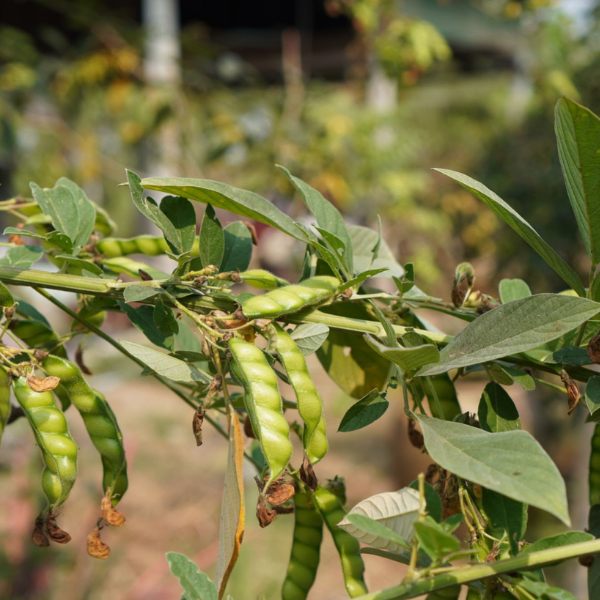
Red Gram
Red Gram, also known as Pigeon Pea or Tur Dal, is one of the most important pulse crops grown in Prakasam district.
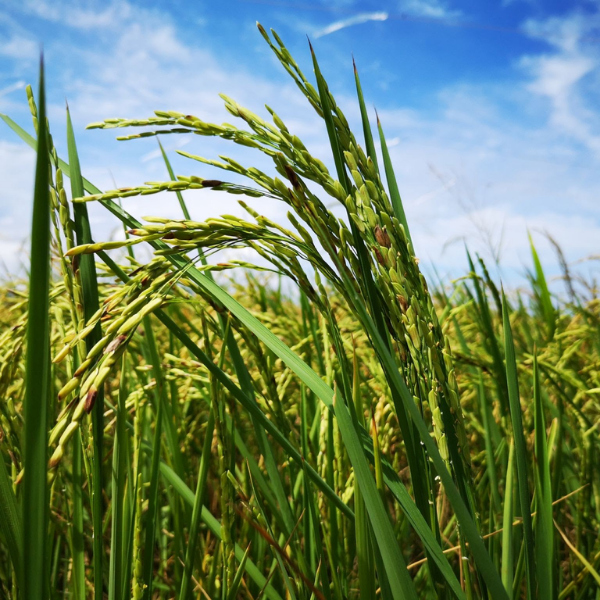
Paddy(Rice)
Paddy, commonly known as rice, is one of the major and most widely cultivated food crops in Prakasam district
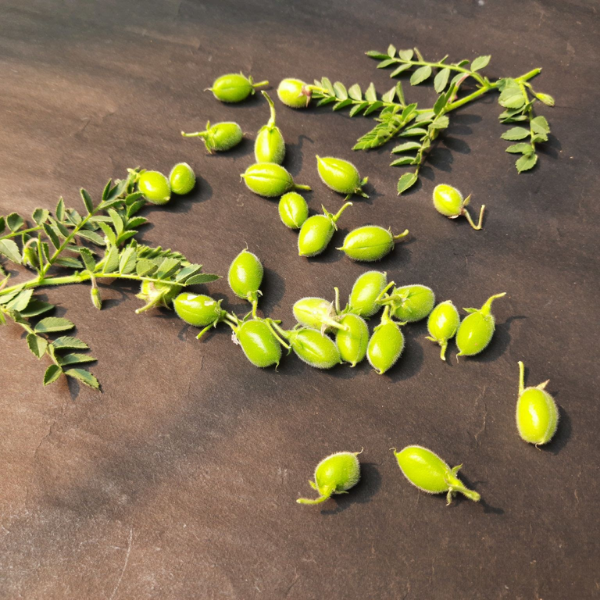
Chickpea
Chickpea, also known as Bengal Gram, is an important Rabi pulse crop grown extensively in Prakasam district.
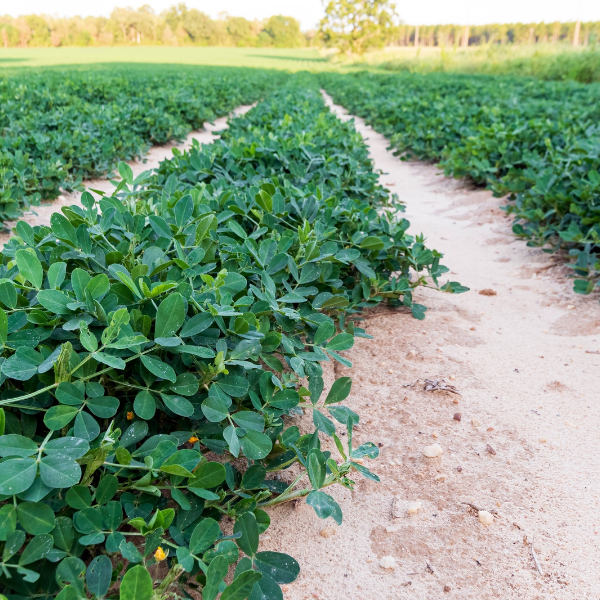
Groundnut
Groundnut is a major oilseed crop widely cultivated in Prakasam district, especially in areas with red sandy loam and well-drained soils.
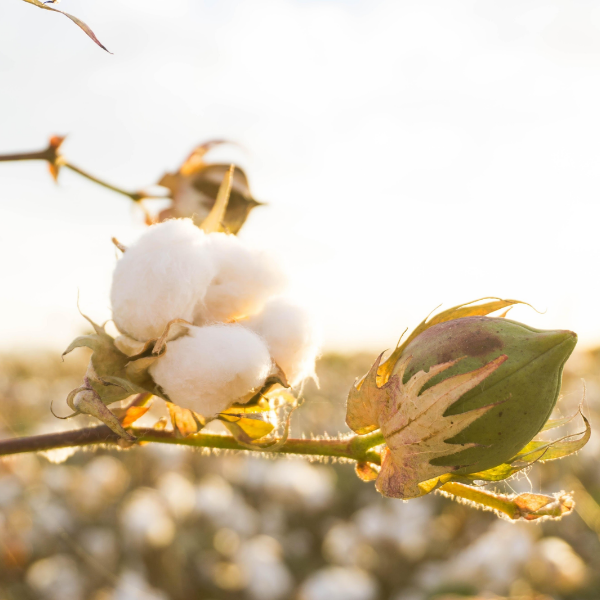
Cotton
Cotton is an important commercial crop grown in Prakasam district, primarily in regions with black cotton soils that provide ideal conditions for its growth.
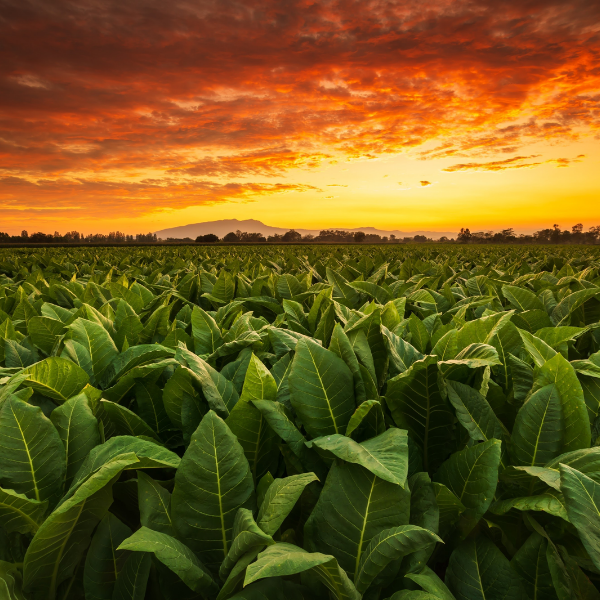
Tobbaco
Tobacco is a key commercial crop in Prakasam district, grown mainly in well-drained red and sandy loam soils. The district’s dry climate helps produce good-quality
Economy
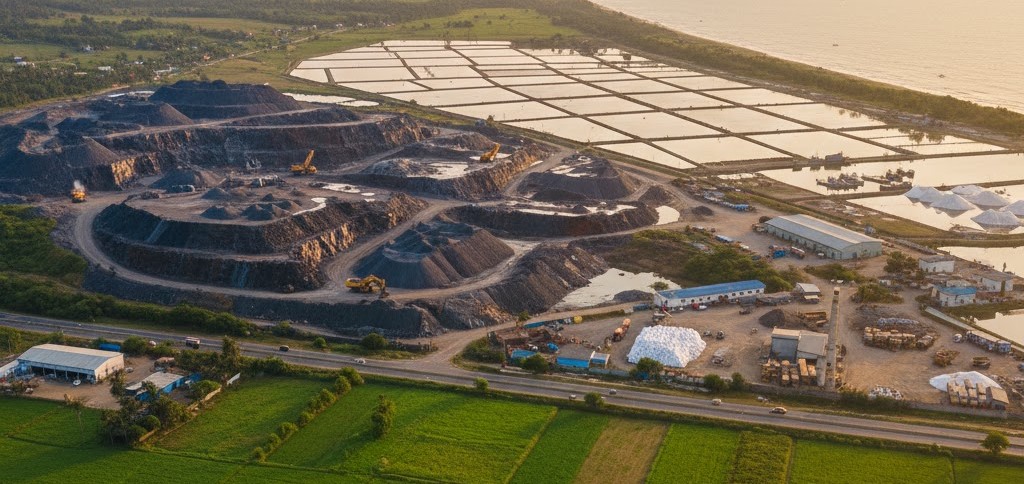
The economy of Prakasam district is diverse, with agriculture, industry, and coastal-based activities contributing equally to its growth. Agriculture remains the backbone, providing livelihood to a major share of the population through crops like paddy, groundnut, red gram, cotton, and chickpea. Alongside farming, horticulture and livestock also support rural income. The district is industrially significant due to the presence of Chimakurthy’s Black Galaxy Granite, which is globally recognized and exported to many countries. Granite mining and polishing units generate major revenue, employment, and support a large network of allied industries.
The coastal region of Prakasam boosts the district’s economy through aquaculture, especially shrimp farming, which is carried out on a large scale and supports seafood processing units. Salt production is another important economic activity along the coast, with thousands of acres used for salt pans. The textile sector also has a strong presence with spinning mills, ginning units, and small garment industries contributing to industrial output. Small and Medium Enterprises (MSMEs) further strengthen the district’s economic structure through manufacturing, trading, and service-based units.
Overall, the economy of Prakasam district is a balanced combination of agriculture, mining, aquaculture, and industry, creating a stable environment for employment, exports, and long-term development.
