
Welcome To Ongole

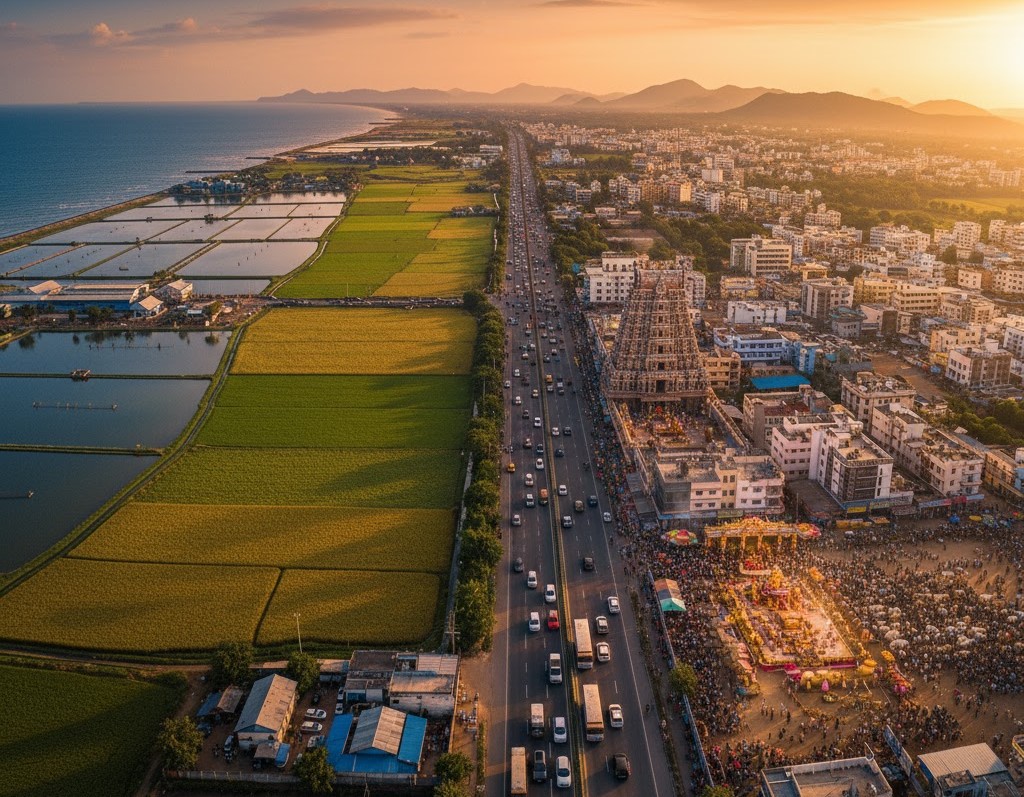
Welcome to Ongole, a historic and fast-growing city that stands as the cultural, administrative, and economic backbone of Prakasam district. With a legacy that stretches back centuries, Ongole is renowned for the prestigious Ongole cattle breed, an internationally recognized symbol of strength and resilience. The city has evolved into a major center for education, healthcare, real estate, and commerce, serving as a vital link between the coastal region and inland Andhra Pradesh.
Ongole is home to ancient temples, bustling markets, government institutions, and a diverse community that embraces both tradition and modern progress. Its strategic location along National Highway 16 enhances connectivity, supports thriving business activity, and attracts industries ranging from agriculture and aquaculture to manufacturing and services. The city’s growing infrastructure—including colleges, hospitals, transportation networks, and residential developments—reflects its steady transformation into a dynamic urban hub.
Blending cultural heritage with contemporary development, Ongole offers visitors and residents a welcoming environment filled with opportunity, community spirit, and a rich sense of identity.
History
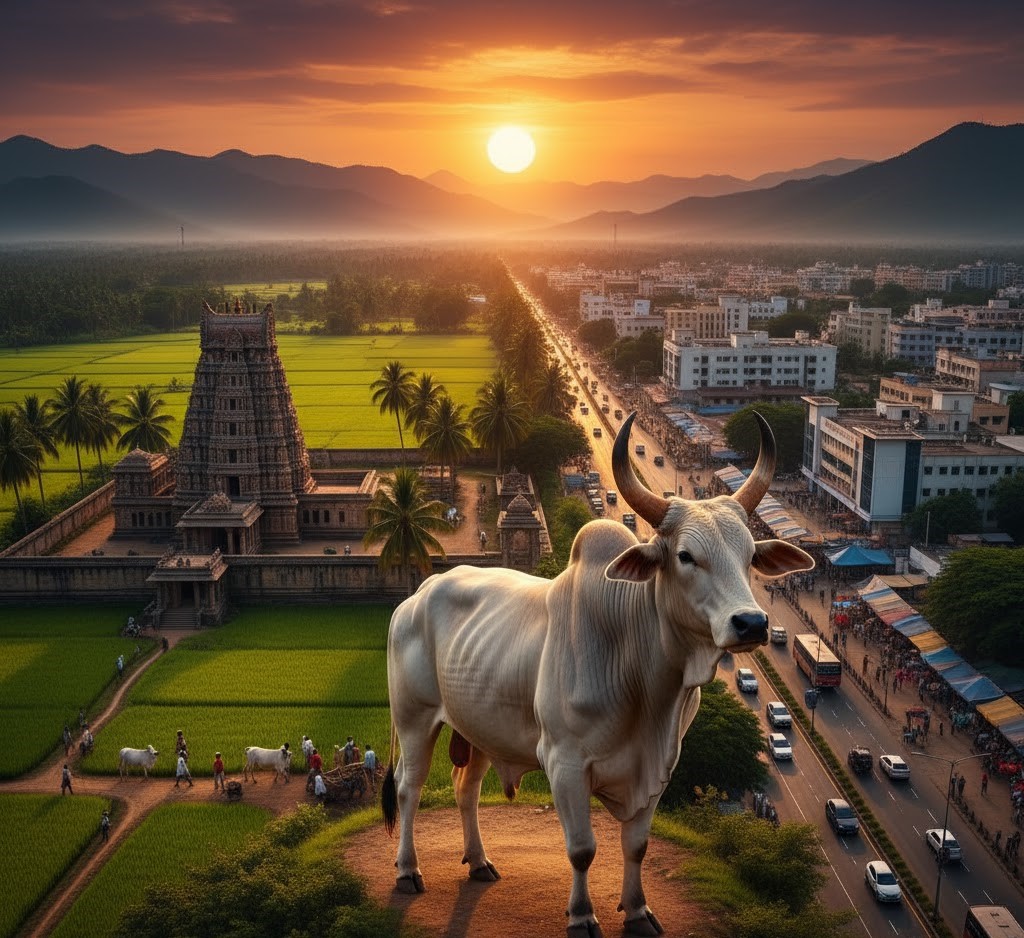
Ongole has a long and culturally rich history shaped by ancient Andhra kingdoms and several major South Indian dynasties, including the Satavahanas, Pallavas, Cholas, and the Vijayanagara rulers. The region grew around early Hindu settlements and evolved into an important administrative and trading center due to its strategic location between the coastal region and inland Andhra Pradesh. Ongole is historically renowned for the Ongole cattle breed, a symbol of strength and agricultural heritage that has been recognized for centuries. During British rule, the town developed further with improved governance, education, and infrastructure. After India’s independence, Ongole rose to greater prominence, becoming the headquarters of Prakasam district in 1970, which accelerated its growth into the vibrant city it is today.
Geography
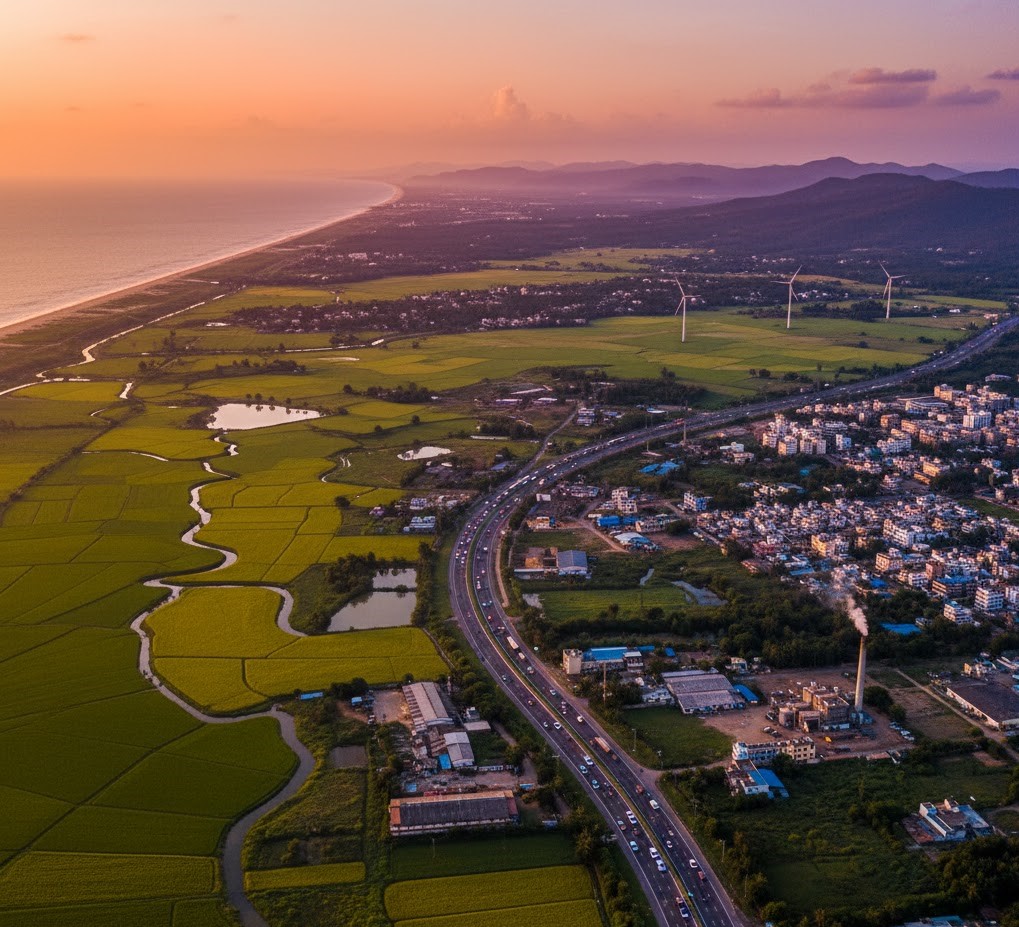
Ongole is geographically positioned in the eastern part of Andhra Pradesh, situated between the Bay of Bengal coastline and the interior plains of Prakasam district. The city lies on relatively flat, fertile terrain that supports both agriculture and urban expansion. Its proximity to the coast influences its tropical climate, characterized by hot summers, humid conditions, moderate winters, and monsoon-driven rainfall that sustains farming and aquaculture activities. Small rivers, ponds, and irrigation tanks around Ongole contribute to the region’s water resources, supporting crops like paddy, tobacco, groundnut, and various horticultural varieties.
Strategically located along National Highway 16, part of the Chennai–Kolkata corridor, Ongole benefits from strong regional and national connectivity, making it a crucial point for trade, transport, and logistics. The area around the city transitions from coastal plains to slightly elevated terrain as it moves inland, giving Ongole a mix of rural landscapes, agricultural fields, and growing urban development. This combination of coastal influence, fertile land, and transport accessibility shapes Ongole’s geographic identity and its role as a key commercial and administrative center in the district.
Economy
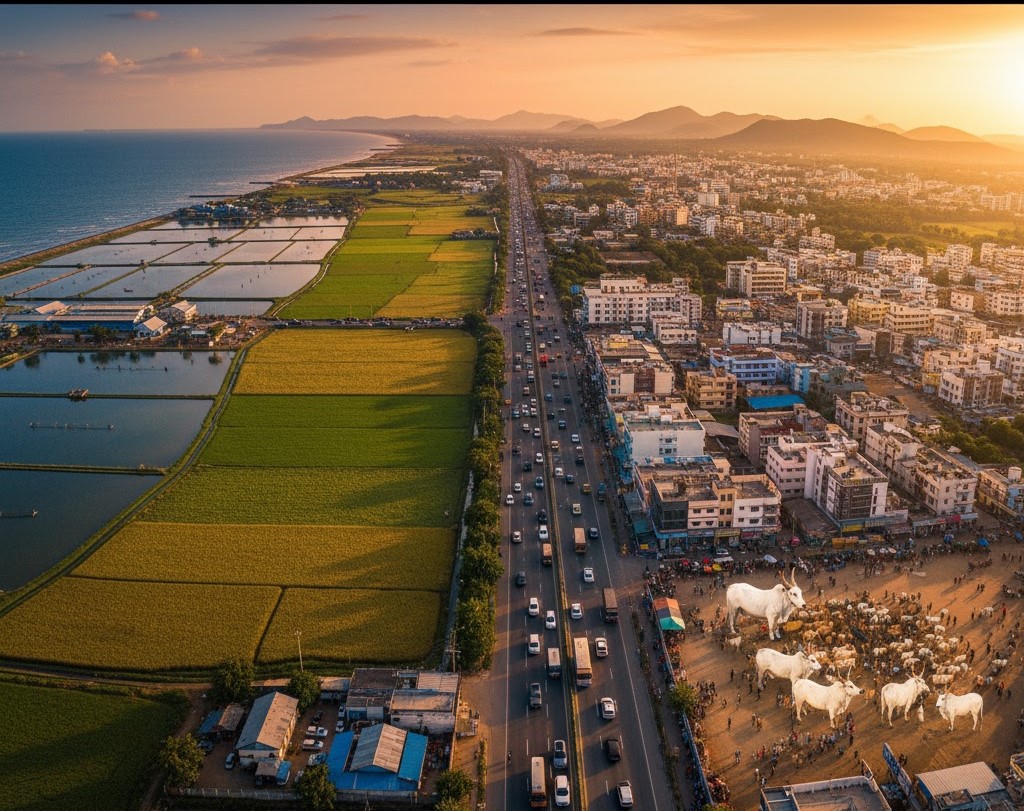
The economy of Ongole is diverse, driven by a strong mix of agriculture, livestock, aquaculture, trade, and growing urban services. The city is internationally known for the prestigious Ongole cattle breed, which has long supported the region’s agricultural and dairy-based livelihoods. Agriculture remains a major economic pillar, with surrounding areas cultivating paddy, tobacco, groundnut, Bengal gram, and horticultural crops, supported by irrigation tanks and coastal climatic conditions.
In recent decades, Ongole has expanded into a significant trade and service hub, with active markets for textiles, consumer goods, building materials, and agricultural inputs. Its strategic location along National Highway 16 boosts transportation, logistics, and wholesale distribution networks, making the city an important commercial link across Andhra Pradesh.Aquaculture, particularly prawn and fish farming in coastal and semi-coastal zones, contributes substantial income and employment. The city also hosts a growing number of educational institutions, hospitals, banks, and real estate developments, reflecting the shift toward a more urbanized service economy. Together, these sectors make Ongole a dynamic economic center combining traditional strengths with modern opportunities.
Culture and Heritage
The culture and heritage of Ongole reflect a vibrant blend of tradition, spirituality, and community life shaped over centuries. The city is home to several ancient temples, including the Sri Kasi Viswanatha Swamy Temple and Chennakesava Swamy temples, which stand as symbols of its deep-rooted religious identity and architectural legacy. Festivals such as Sankranti, Ugadi, Vinayaka Chavithi, and temple fairs are celebrated with great devotion, bringing communities together through music, dance, rituals, and traditional crafts. Ongole’s heritage is also strongly tied to the iconic Ongole cattle breed, a historical symbol of strength and agricultural pride that has shaped the region’s rural culture for generations. The city’s coastal influence, diverse cuisine, and long-standing market traditions contribute to a cultural landscape where history and modernity coexist harmoniously. Despite rapid urban growth, Ongole continues to preserve its spiritual, social, and artistic traditions, maintaining a strong cultural identity rooted in its past.