Welcome To Kandukur

Kandukur is a developing town with a strong agricultural foundation and an active commercial environment. The region’s fertile lands support the cultivation of key crops such as paddy, tobacco, groundnut, and various pulses, making agriculture the primary driver of the local economy. As a major trading point for surrounding villages, Kandukur’s markets and business centers bustle with activity, connecting farmers, traders, and consumers across the district.
In recent years, Kandukur has seen steady growth through its expanding educational institutions, enhanced transportation connectivity, and gradually improving infrastructure, positioning the town as an emerging hub within Prakasam district. These developments contribute to better access to services, employment, and opportunities for the local population.
Despite its progress, Kandukur maintains a warm and community-centered culture, reflecting its blend of rural traditions and modern aspirations. With its agricultural strength, commercial importance, and evolving urban landscape, Kandukur offers a welcoming and promising environment for residents, visitors, and businesses alike.
History
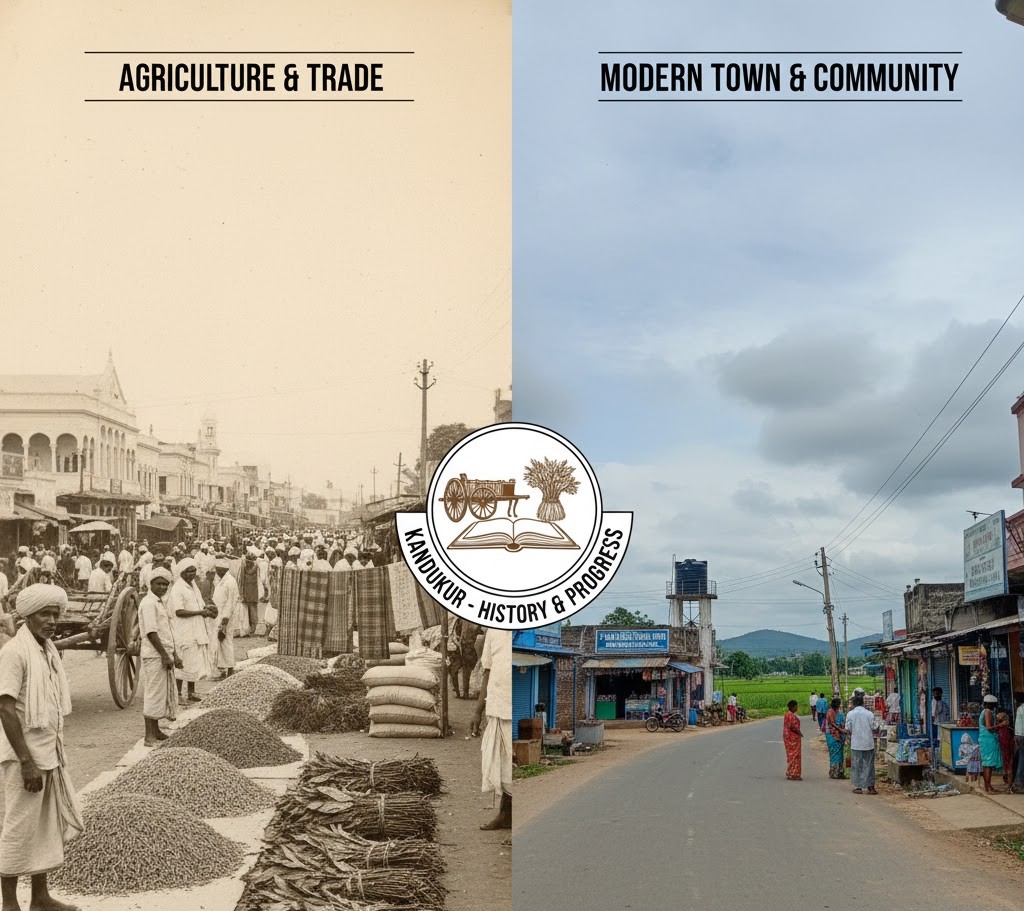
Kandukur, located in the Prakasam district, has a history rooted in agriculture, trade, and early regional administration. Historically known as “Skandapura,” the town evolved as a settlement surrounded by fertile lands that supported paddy, tobacco, and groundnut cultivation, making it a key agricultural center for nearby villages. Over time, Kandukur developed as a local trading hub where farmers and merchants exchanged produce, textiles, and essential goods. During the British period, the town grew further with the establishment of basic administrative structures, markets, and early education facilities, shaping its role as a service point for surrounding rural areas. Though small in size, Kandukur has steadily progressed through community-driven development, preserving its cultural identity while expanding into a modern regional town within Prakasam district.
Geography
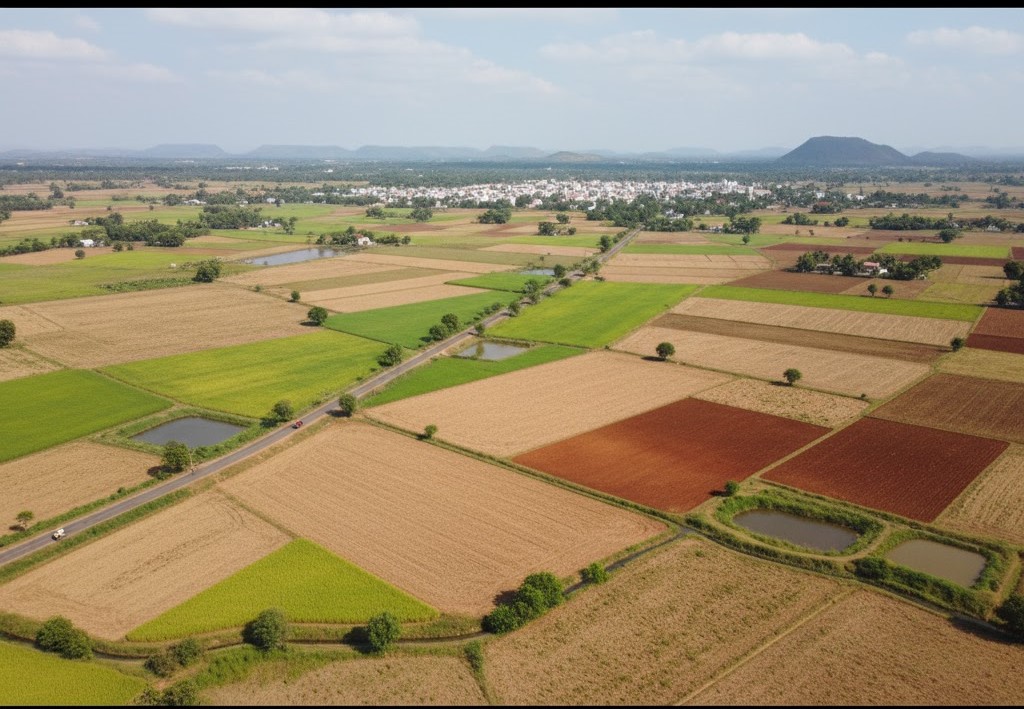
Kandukur is located in the southern part of Prakasam district in Andhra Pradesh, positioned on gently undulating plains that support agriculture and rural settlements. The region features fertile black and red soils, which enable the cultivation of crops like paddy, tobacco, groundnut, and pulses. Kandukur experiences a tropical climate with hot summers, moderate winters, and seasonal monsoon rains that are crucial for farming. The town is surrounded by agricultural fields and small water bodies that support irrigation, while road networks connect it to nearby towns such as Ongole and Kavali. Its inland location and stable terrain make Kandukur a strategically placed regional center within the district.
Economy
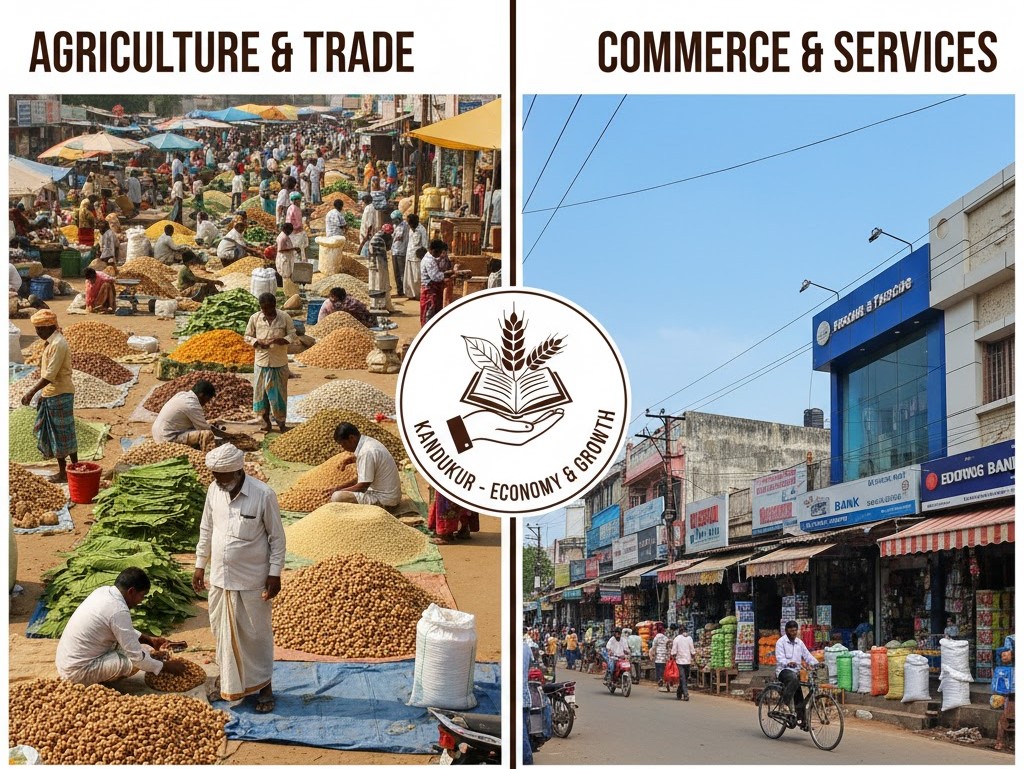
Kandukur’s economy is primarily driven by agriculture, with paddy, tobacco, groundnut, and pulses forming the core of local production and trade. The town functions as a major market center for surrounding villages, where farmers bring their produce for wholesale and retail exchange. Tobacco trading, in particular, plays a significant economic role, supporting farmers, merchants, and processing units. Alongside agriculture, Kandukur hosts a growing commercial sector with retail shops, small-scale industries, agro-based businesses, and service establishments contributing to daily economic activity. Educational institutions, healthcare services, and transportation connectivity further support local employment and business growth. Overall, Kandukur’s economy reflects a balanced mix of traditional farming strength and expanding commercial development.
Culture and Heritage
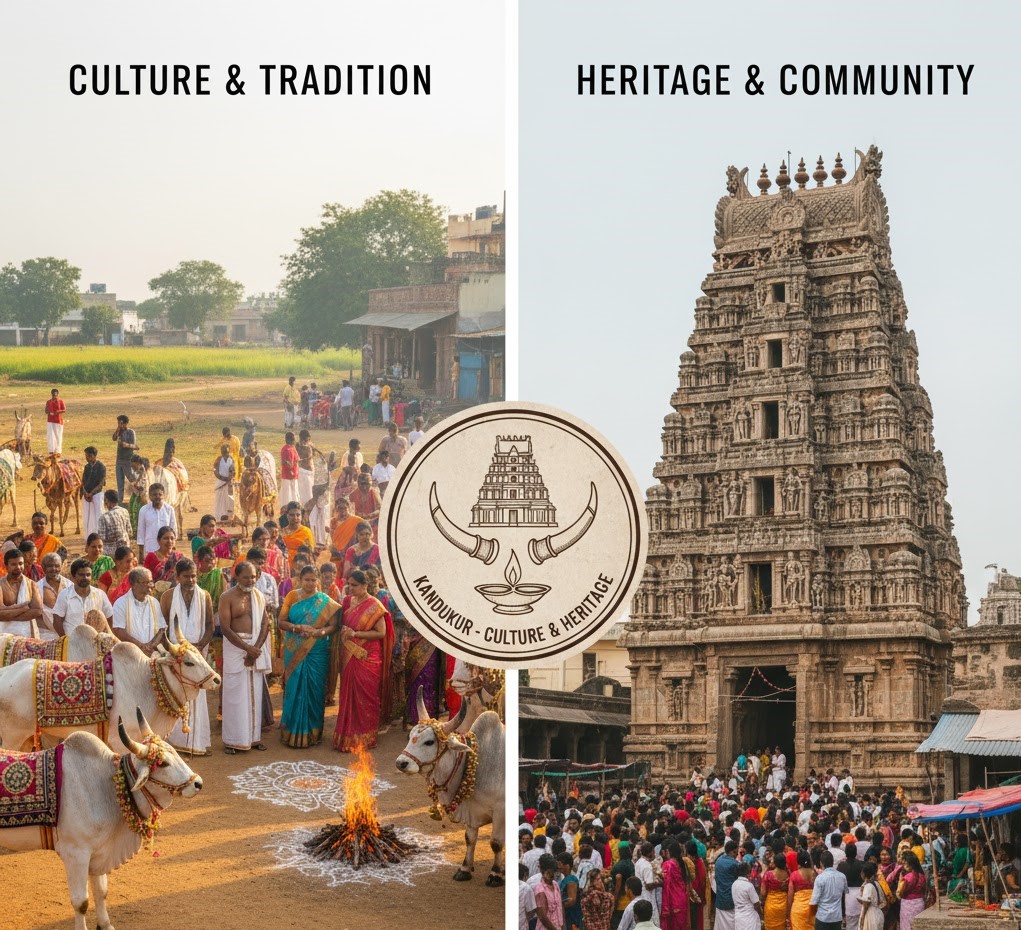
Kandukur’s culture and heritage are deeply rooted in its agrarian lifestyle, traditional festivals, and strong community values. The town reflects the cultural identity of rural Andhra, where celebrations like Sankranti, Ugadi, Dasara, and local temple festivals bring people together in vibrant displays of tradition. Ancestral customs, folk practices, and village fairs continue to shape the social fabric of the region. Kandukur’s heritage is also reflected in its old marketplaces, centuries-old agricultural practices, and temples that stand as reminders of its historical evolution from a small farming settlement to a growing regional center. Despite ongoing development, the town maintains a close-knit community atmosphere, preserving its cultural continuity while embracing modern progress.